

RipplesIPS: How Our 0-Wire RTLS Platform Works
RipplesIPS is the real-time location platform behind every Ripples IoT deployment, providing a scalable enterprise real time location system (RTLS) for industrial and logistics environments. It combines four wireless technologies—Bluetooth 5 mesh, Bluetooth Angle of Arrival (AoA), LoRaWAN, and Wirepas mesh—into a single cable-free infrastructure that can be installed in days, not months.
One platform.
One dashboard.
Every asset, worker, and environment in your facility is visible in real time.
The Four Technologies – How RipplesIPS Works
Bluetooth 5 Mesh: Serves as the backbone of most deployments. Battery-operated beacons self-organise into a mesh across your facility — no cabling, no IT project, no downtime. Coverage scales by adding gateways; the network heals around any single point of failure. Most customers are live within a week using this robust indoor positioning system architecture powered by our Bluetooth Mesh IoT Platform.
Bluetooth Angle of Arrival (AoA): Raises positional accuracy down to 10 centimetres in zones where it matters most. Ceiling-mounted AoA antennas triangulate tag position using signal phase data — not simple signal strength — making it reliable even in dense, high-interference environments like pallet racks or clinical bays. For high-precision tracking use cases, review our solutions for Bluetooth Real Time Asset Tracking.
LoRaWAN: Extends tracking to outdoor and long-range scenarios where Bluetooth range is insufficient. Tags combine GNSS for outdoor positioning with automatic Bluetooth handoff for seamless indoor-outdoor continuity — useful in large container yards, construction sites, or multi-building campuses.
Wirepas Mesh: Delivers low-latency tracking for safety-critical zones, worker tracking, and forklift proximity warnings.
All four technologies feed a single RipplesIPS dashboard with drag-and-drop visualisation, configurable alerts, and a rule engine for automating business logic — FIFO compliance triggers, geofence breaches, dwell-time thresholds, and more.
Where RipplesIPS is Deployed
The same platform adapts to the accuracy, range, and environmental requirements of each sector:
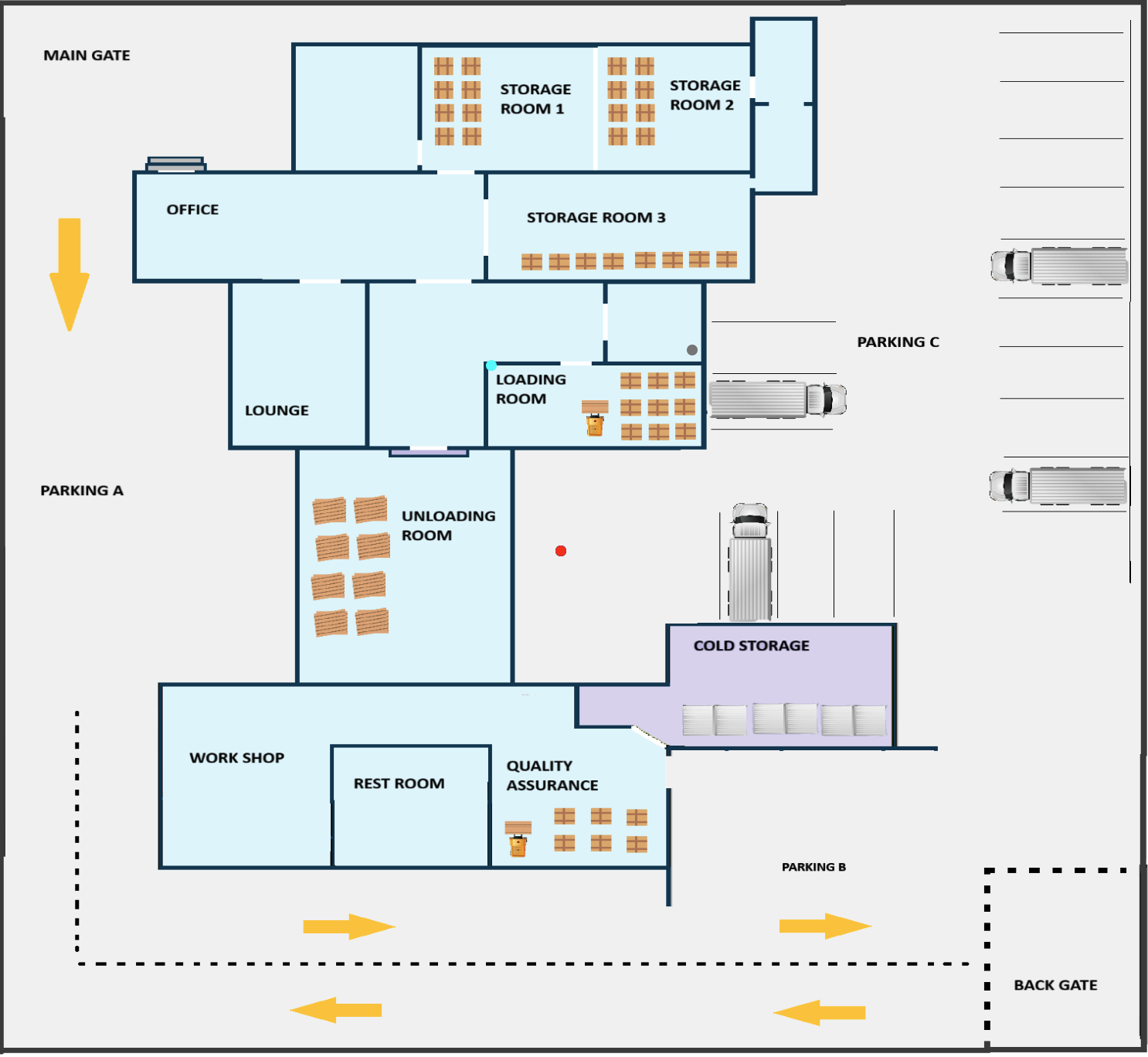
Logistics and Warehousing: Track pallets, trailers, and forklifts across yards and warehouse floors using advanced indoor tracking tools. Automate gate check-in, enforce FIFO inventory compliance, eliminate trailer search time, and monitor cold chain conditions — temperature, humidity, and door events — without manual logging. Industrial facilities and distribution hubs can achieve seamless operational visibility by implementing Bluetooth mesh asset tracking without civil work, enabling precise real-time inventory tracking for high-density pallet racks, discovering methods on how to automate FIFO compliance in a warehouse, and deploying automated tracking solutions to drastically reduce trailer search time in container yards.
- Factory shop floor and manufacturing: Industrial facilities seeking to modernise shop floor operations can adopt a 0-wire manufacturing execution system alternative that utilises Bluetooth Mesh RTLS for assembly line optimisation to eliminate bottlenecks. By integrating automated WIP lead time tracking software alongside a reliable forklift proximity warning system for industrial safety, plants can simultaneously maximise production throughput and protect shop floor personnel without undertaking disruptive infrastructure overhauls.
- Healthcare facilities: Looking to upgrade clinical workflows and asset visibility can deploy a zero cabling & room level indoor positioning for clinics to instantly monitor critical equipment like a real-time location system for tracking medical infusion pumps. By implementing BLE RTLS for hospital asset and patient flow tracking alongside automated temperature monitoring for hospital blood banks, hospitals can drastically reduce equipment search times, streamline patient throughput, and ensure strict regulatory compliance without the disruption of invasive wiring.
- Construction and Demolition: Deploy portable BLE gateways on active sites with no fixed infrastructure. Track worker location across multi-floor structures, enforce exclusion zones during demolition phases, and log attendance automatically.
Key Platform Features & Architecture
0-Wire Installation: RipplesIPS requires no cable runs, no civil works, and no requirement to involve your facilities or electrical teams. Beacons and gateways are battery-powered and mount with adhesive or standard fixings. A typical facility is fully live within 7 days — including hardware placement, zone configuration, dashboard setup, and staff orientation. Pilot deployments using the starter kit are usually operational within 48 hours.
Positional Accuracy: Depends on the technology active in each zone. Bluetooth 5 mesh provides room-level or bay-level accuracy suitable for most inventory and asset tracking use cases. Bluetooth AoA raises this to 10 centimetres for high-density zones like pallet racks or dock doors.
Dual-Tag Redundancy: Places two beacons on a single asset so that location data is maintained even if one tag enters a signal shadow, is obscured by surrounding inventory, or is physically damaged. It is recommended for high-value assets, temperature-sensitive pallets in cold chain environments, and any inventory where a missed location event carries a meaningful operational or compliance cost. The platform reconciles both signals automatically — no configuration is needed at the dashboard level.
Worker Panic Buttons: Worker wearable tags include a hardware panic button that, when pressed, immediately pushes an alert to the RipplesIPS dashboard and any configured notification channel — SMS, email, or third-party integration. The alert includes the worker’s name, precise location by zone and floor, and a timestamp. Response teams can see the location on the live map without needing to search. The panic button is particularly valuable in high-noise factory environments, lone-worker scenarios, and construction or demolition sites where verbal communication is unreliable.
Integrations & Hosting: The platform exposes standard APIs for integration with warehouse management systems, ERP platforms, and transport management software. The rule engine can push real-time events — gate check-ins, FIFO violations, dwell-time breaches — directly into your existing workflows without manual export. On-premise deployment is available for customers with data residency requirements. For a complete system walkthrough, explore the primary Real Time Location System platform page.