
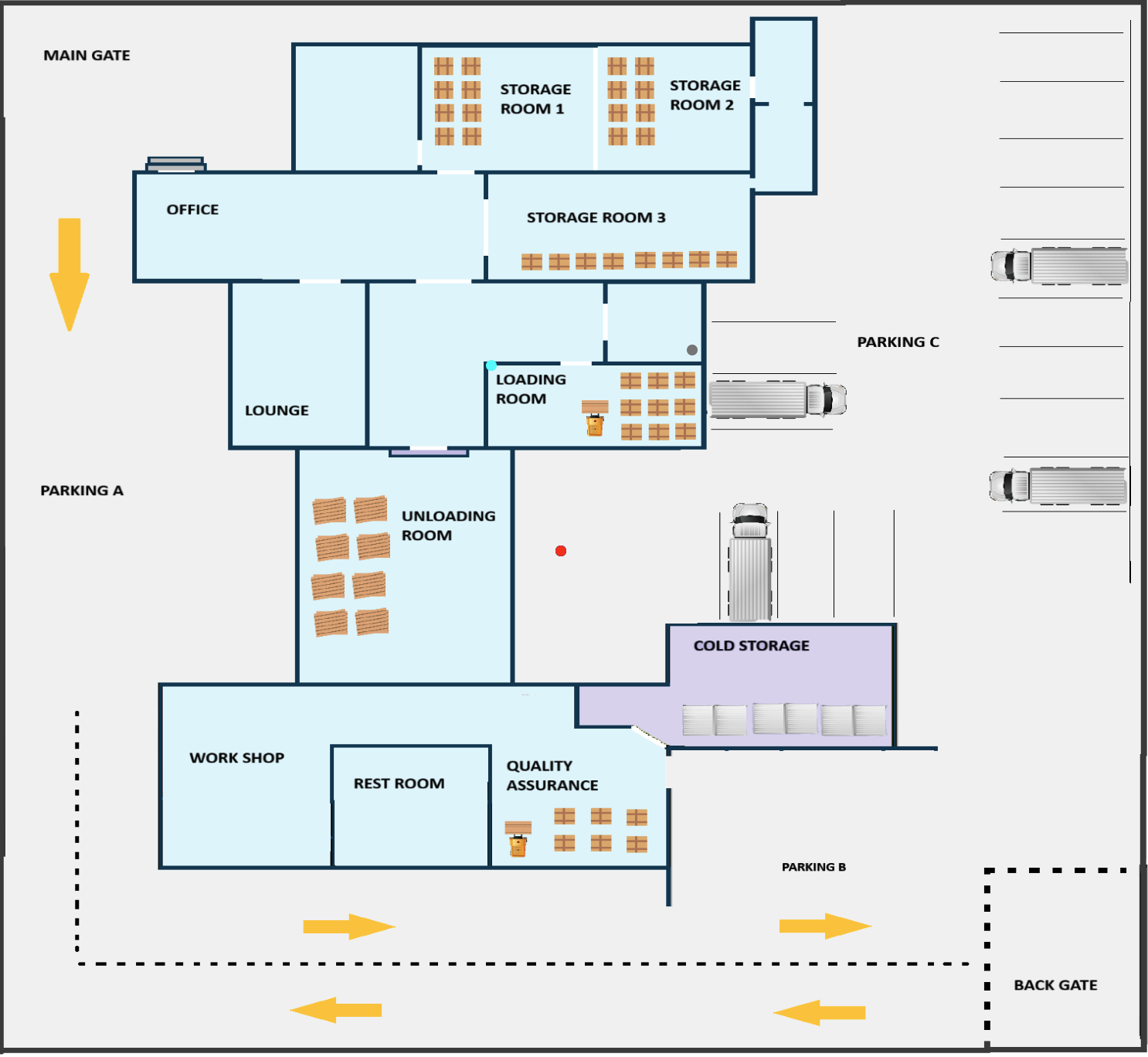
Indoor positioning technology works differently depending on the environment it’s deployed in. For how the underlying system works — mesh networks, tags, and anchors — see our indoor positioning system guide. Below is how it’s actually used across manufacturing, healthcare, warehousing, and logistics.
The ideal indoor positioning technology depends on three core variables: required accuracy, facility size, and budget. Each underlying method trades off accuracy against cost and deployment complexity differently. New to the concept entirely? See our complete guide to what an indoor positioning system is first — this page compares the specific technologies most relevant to industrial and warehouse deployments.
Manufacturing & Shop Floor
Indoor RTLS on the shop floor tracks tools, materials, and workers in real time, giving manufacturers visibility into workflow bottlenecks and machine downtime without adding wired infrastructure. It’s one of the fastest ways to improve manufacturing workflows using existing Bluetooth mesh hardware.
Technology Comparison Table
| Technology | Accuracy | Reader Cost | Tag Cost | Battery Life | Best For |
|---|---|---|---|---|---|
| BLE AoA | 0.3–1 m | $70–120 | $30–70 | 2–5 years | Warehouses, hospitals, yards |
| UWB | 10–30 cm | $200–500 | $80–150 | 1–3 years | Manufacturing, pharma, robotics |
| LoRaWAN | Zone-level | $50–80 | $40–60 | 5–10 years | Large yards, cold chain, outdoor-indoor |
| WiFi | 3–15 m | Existing infrastructure | App-based | N/A | Coarse navigation, people flow |
| Passive RFID | Gate/portal only | $1,500–2,000 | $0.10–1 | Passive | Dock doors, checkpoints |
Note on Ripple IoT’s Approach: RipplesIoT deploys BLE AoA, offering an optimal balance of sub-metre accuracy, moderate cost, and zero-wiring deployment designed for standard warehouse and hospital use cases. Explore our 0-wire BLE RTLS platform.
BLE vs RFID — The Most Common Comparison
Most buyers evaluating indoor positioning options shortlist BLE (Bluetooth Low Energy) and RFID first. Understanding their operational differences helps determine the right fit:
Passive RFID: Operates strictly as a gate technology, reading at 1–5 feet per portal. It confirms when an asset passes a checkpoint (such as dock door scan-in/scan-out), but cannot track continuous indoor positioning on the floor. Reader costs range from $1,500 to $2,000 per portal.
BLE AoA (Angle of Arrival): Delivers continuous floor-level location across 10–50 metres per reader. Tags cost $30–70 with a 2–5 year battery life. Because it requires no wiring, no portals, and leaves no blind spots, it is ideally suited for real-time asset location, FIFO enforcement, and pallet tracking across an entire warehouse floor at a fraction of the infrastructure cost.
For most warehouse deployments, BLE AoA delivers more actionable data at a fraction of the RFID infrastructure cost. Explore our budget indoor positioning guide for deployment cost estimates.
Which Industries Use This Technology?
Warehouses & Logistics: Real-time pallet location, FIFO automation, forklift tracking, and inventory cycle counting. See warehouse monitoring systems.
Hospitals: Patient flow tracking, vital asset location, and staff safety. See RTLS for hospitals.
Factories & Shop Floors: Work-in-Progress (WIP) tracking, machine uptime monitoring, and worker safety zones. See production floor management.
Yard Management: Trailer location, dock assignment, and dwell time reduction. See yard management.
Cold Chain: Temperature-tagged pallet tracking seamlessly transitioning from docks to cold storage. See cold chain monitoring.
Barriers to Adopting Indoor Positioning Technology
Cost: While historic systems like UWB or enterprise RFID involved high entry barriers, BLE AoA has substantially lowered deployment costs. Our starter kit lets you validate ROI in one zone before committing to a full rollout.
Installation Time: Modern 0-wire BLE systems deploy in days rather than weeks, bypassing the need for conduit or ceiling cable runs.
Battery Maintenance: BLE tags operate for 2–5 years per battery, meaning organisations must factor a structured battery replacement schedule into their total cost of ownership (TCO) at scale.
Choosing a Provider: Because accuracy claims vary widely across vendors, live demonstrations within your own facility are recommended before committing to any platform.
How Accurate Does Indoor Positioning Technology Need to Be?
It depends entirely on the use case. Zone-level accuracy (a few metres) is sufficient for people-flow analytics or coarse asset location. Sub-metre accuracy — BLE AoA’s range — is needed for FIFO enforcement and precise pallet or forklift tracking. Sub-30cm accuracy (UWB) is typically reserved for robotics and precision manufacturing, where the cost premium is justified by the application.
Not sure which technology fits your industry? Compare indoor positioning technologies by accuracy, cost, and deployment complexity.