
Industrial Real Time Location System (RTLS) & Indoor Positioning Platform
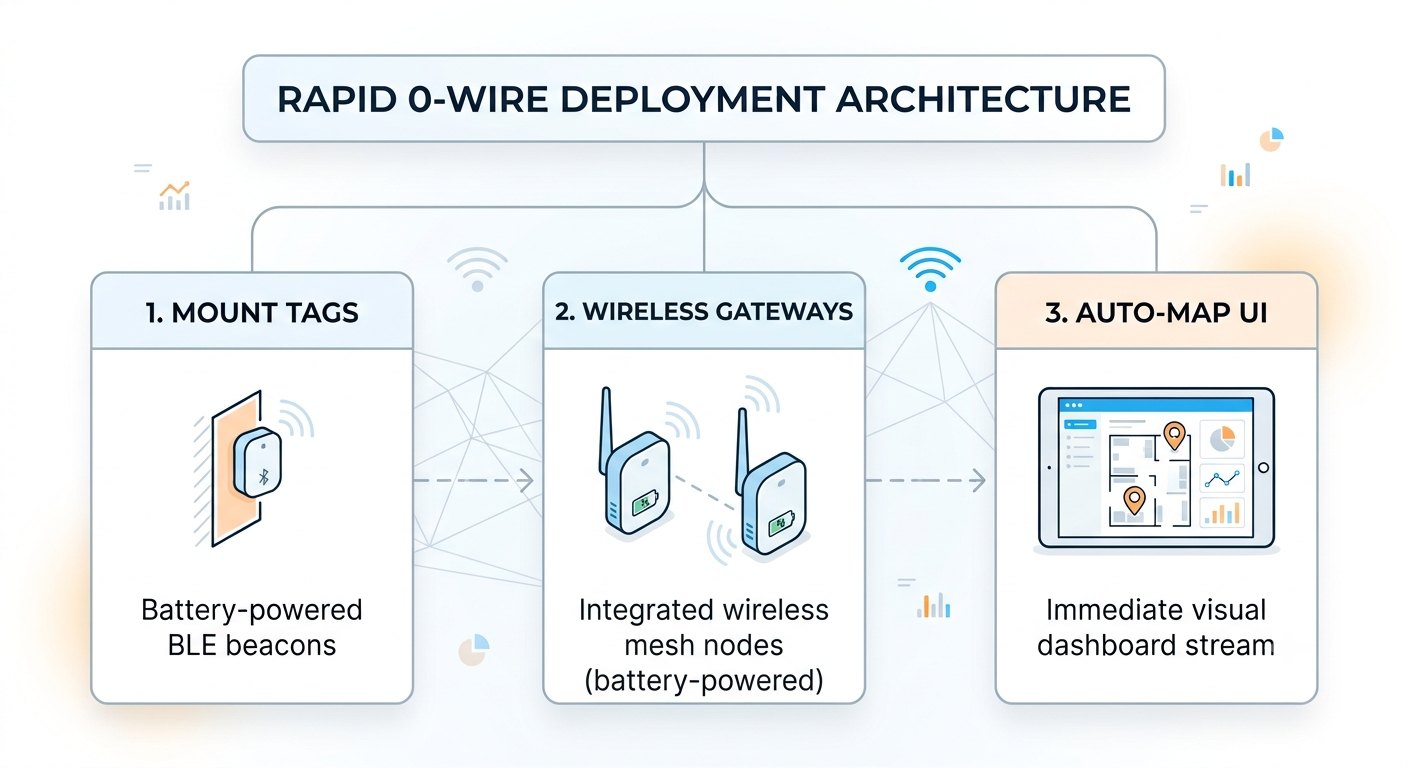
Next-Generation Facility Visibility Without the Wiring
Traditional real-time location systems (RTLS) require months of invasive ceiling drops, heavy electrical work, and high capital investment. RipplesIPS is an enterprise-grade, 0-wire indoor positioning platform built for industrial warehouses, manufacturing plants, and healthcare facilities where rapid deployment and zero disruption are critical.
Combining Bluetooth 5 Mesh, Bluetooth Angle of Arrival (AoA), and edge computing, our architecture delivers sub-meter position accuracy—commissioned and live on your active floor in under 7 days.
Core RTLS Vertical Applications
1. Warehousing & Logistics Hubs
Eliminate manual barcode scanning bottlenecks, speed up inventory cycle counting, and automate pallet flow from the receiving dock to high-rack storage.
High-Density Pallet Tracking: Instantly locate stock items and eliminate mis-picks with live zone-宁-zone mapping, powered by rugged wireless inventory tracking beacons.
FIFO / FEFO Enforcement: Automatically track arrival timestamps and cross-reference inventory age against dispatch queues. Know about real-time pallet tracking architecture
Cold Chain Integration: Monitor temperature, humidity, and door-open events alongside real-time location on a single dashboard.
2. Manufacturing Shop Floors & Industrial Plants
Optimise material flow, monitor equipment utilisation, and reduce line-side stockouts across complex production phases.
Work-in-Progress (WIP) Tracking: Track parts and tooling through multi-stage assembly zones to prevent production bottlenecks.
Machine Uptime & Equipment Health: Track asset movement alongside metrics from our real-time machine uptime tracking dashboard to trigger preventive maintenance before costly motor or pump failures occur.
Lone Worker Safety: Provide wearable panic buttons with instant zone-level SOS alerts for rapid emergency response.
3. Healthcare Facilities & Clinical Operations
Deploy reliable, room-level asset tracking across hospitals, nursing homes, and regional clinics without disrupting patient care.
Medical Equipment Fleet Tracking: Locate mobile infusion pumps, portable ventilators, and wheelchairs instantly to eliminate asset hoarding and search times.
Automated Compliance Logging: Maintain continuous temperature monitoring for hospital blood banks and vaccine refrigerators to satisfy regulatory audits.
Why Operations Leaders Choose RipplesIPS
0-Wire Architecture: Battery-powered anchors and adhesive tags eliminate conduit runs, ceiling cabling, and electrical contractors.
Scalable Dual-Tag Redundancy: Ensure 100% data reliability on high-value or safety-critical assets using dual-tag tracking to eliminate signal shadows.
Seamless ERP & WMS Integration: Connect location events directly to platforms like SAP, Oracle, Microsoft Dynamics, and custom WMS/CMMS environments via secure REST APIs and MQTT web hooks.
Frequently Asked Questions (FAQ)
1. What is the difference between Bluetooth RSSI mesh and Angle of Arrival (AoA) for RTLS?
RSSI mesh uses signal strength to calculate general zone or room-level proximity (accurate to 1–3 meters), making it ideal for large-scale warehouse asset tracking and FIFO management. Angle of Arrival (AoA) utilizes specialized antenna arrays to achieve sub-meter precision (down to 10–30 cm), which is critical for precise workstation assembly tracking and high-value tool localization. RipplesIPS supports hybrid deployments tailored to your exact accuracy requirements.
2. How long do the batteries last on RipplesIPS tracking tags and anchors?
Both tags and mesh anchors are completely wireless and battery-powered. Depending on your configured ping interval and sensor type, tags deliver 3 to 10 years of continuous life. Anchors feature easily swappable industrial lithium batteries rated for 3+ years of maintenance-free operation under standard industrial duty cycles.
3. How does the system handle internet or power outages on the shop floor?
RipplesIPS relies on edge gateways with built-in local storage and battery backup. If a facility loses primary power or internet connectivity, local mesh anchors continue logging and storing event data directly on the gateway. Once network connectivity is restored, the system automatically syncs all audit trails and location logs to the cloud dashboard without data loss.
4. Can the RTLS platform integrate with our existing WMS, ERP, or CMMS software?
Yes. The RipplesIPS platform is built for open enterprise integration. It connects seamlessly with platforms such as SAP, Oracle, Microsoft Dynamics, and custom software environments via secure REST APIs, MQTT, and JSON web hooks, ensuring location events flow directly into your existing business workflows.
5. How long does a typical full-facility RTLS deployment take?
Because RipplesIPS features a 0-wire architecture, deployment does not require electrical wiring, ceiling drops, or heavy structural modifications. A standard pilot covering a single warehouse zone or manufacturing line goes live in under 7 days, while full facility rollouts typically scale rapidly without operational downtime.
Ready to Map Your Facility?
Validate the architecture in your highest-risk zone with our pre-configured Industrial RTLS Starter Kits, or review our flexible plans on the pricing page.