
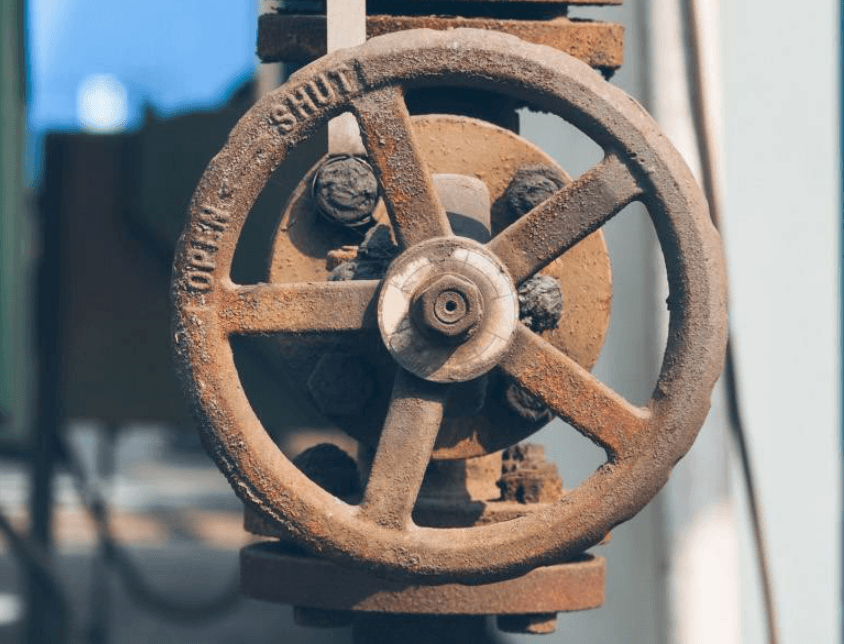
Unplanned equipment failure is expensive, not just the repair but the production hours lost waiting for it. Condition monitoring catches the early signs of a developing fault while the machine is still running, so maintenance gets scheduled on your terms instead of being forced on you by a breakdown. Ripples IoT does this with battery-powered BLE vibration sensors that clip onto your existing motors, pumps, HVAC units and gearboxes — no rewiring, no PLC or SCADA integration, no downtime to install — feeding a real-time machine monitoring dashboard your team can act on.
What Is Condition Monitoring
Condition monitoring tracks a physical signal, vibration in our case, to spot the moment a machine’s behaviour drifts from normal. Every rotating asset has a baseline vibration signature when it is healthy. As bearings wear, shafts misalign or mounts loosen, that signature changes well before the change is audible or the machine actually stops. Catching that drift early is what turns maintenance from reactive into predictive — and what keeps a machine uptime dashboard actually current instead of a snapshot from the last inspection.
How BLE Vibration Sensors Catch Problems Early
A triaxial accelerometer inside the sensor continuously measures vibration across all three axes. Once a normal baseline is established for a given machine, the system flags deviations that match known fault patterns.
That signature is expressed as RMS vibration velocity, the same metric used in ISO 20816-1, so a deviation from baseline isn’t just relative to the machine’s own history — it can also be checked against the zone a properly classified asset should sit in.
Imbalance – uneven vibration tied to rotational speed
Misalignment – irregular vibration where two coupled components meet
Bearing wear – high frequency vibration spikes that build over time
Looseness – vibration that increases under load or vibrates erratically
The sensor does not need a line of sight or wiring back to a controller; it reports over the same Bluetooth mesh used across the rest of your RTLS asset tracking solutions deployment.
Equipment We Monitor
Motors and Pumps
The highest frequency failure point in most facilities, and where motor downtime prevention pays off fastest. Vibration typically shows up weeks before a bearing or seal actually gives out. This is our most requested motor pump monitoring use case, covered in full on our motor pump monitoring page, where you can also find the starter kit for a single-line pilot.
HVAC Units
Fan and blower imbalance accelerates wear on motor mounts and belts. Catching it early avoids a full unit replacement.
Compressors
Vibration from worn valves or piston wear shows up as a measurable frequency shift before output capacity drops.
Gearboxes
Gear mesh wear and shaft misalignment both register as distinct vibration signatures specific to each fault type.
Conveyors
Roller bearing wear and belt misalignment are two of the most common unplanned downtime causes on a production line, and both are vibration detectable.
If it rotates and you would rather know about a problem before it stops, it is a candidate for this.
From Vibration Data to a Machine Monitoring Dashboard
Predictive maintenance sensor readings feed into the same Ripples IoT dashboard and rule engine used for asset and workforce tracking, including the machine usage and Time on Tools tracking already running on your shop floor. The same alert feed also powers our manufacturing downtime tracking, so vibration events and unplanned stops show up on one downtime dashboard instead of two separate systems. Role based access levels keep the data visible only to the maintenance staff and abnormality managers who need it.
You set the threshold — a percentage deviation from the machine’s own baseline, an absolute RMS velocity value, or a standard boundary like the ISO 20816 B/C zone transition — and the system handles the rest: an alert to the maintenance team, a ticket into your CMMS, or a notification the moment a reading crosses the line.
Vibration Monitoring vs Manual Inspection
Most facilities still rely on a maintenance technician doing periodic walk-arounds with a handheld vibration meter, or simply waiting for a machine to sound wrong. Both approaches miss the gap between inspections, a bearing can go from early wear to failure in days, and a monthly or even weekly walk around is not frequent enough to catch that window. Continuous sensor monitoring closes that gap: instead of a snapshot every few weeks, you get a constant baseline with an alert the moment something deviates from it, regardless of whether anyone is scheduled to check that machine that day.
What ISO 20816-1 Actually Measures
Vibration severity under ISO 20816-1 is classified using RMS vibration velocity in mm/s, measured in the 10–1000 Hz range on the bearing housing. The standard sorts machines into groups by power rating and how rigid the foundation is, then defines four zones for each group:
- Zone A — typical of a newly commissioned machine
- Zone B — acceptable for unrestricted long-term operation
- Zone C — unsatisfactory for continued long-term operation; schedule remedial action at the next convenient opportunity
- Zone D — vibration levels considered severe enough to damage the machine
For a typical 15–300 kW motor or pump bolted to a rigid foundation (ISO 20816-3, Group 2 Rigid) — the most common case on a plant floor — the published boundaries are:
| Zone transition | RMS velocity |
|---|---|
| A → B | 1.4 mm/s |
| B → C | 2.8 mm/s |
| C → D | 7.1 mm/s |
(Values are for Group 2 machines on rigid foundations per ISO 20816-3. Large machines (>300 kW), flexibly mounted equipment, and specialty categories like reciprocating compressors carry different limits — your commissioning engineer can confirm the right group for a given asset.)
Ripples IoT sensors report continuous RMS velocity readings, so a threshold set at the B/C boundary flags a machine moving from “acceptable” to “needs attention” before it reaches Zone D — the zone where damage is actually occurring.
This kind of continuous, plant-wide visibility is also what feeds into production floor management, where equipment condition sits alongside worker tracking and WIP visibility on the same floor-level dashboard — one industrial IoT platform for plant-wide condition monitoring rather than a separate tool for every signal.
FAQ
How often does the sensor report data?
Reporting frequency is configurable based on the criticality of the equipment: more frequent intervals for critical machinery, longer intervals to extend battery life on lower priority assets.
Can I monitor machine uptime without connecting to the PLC?
Yes. The sensors are battery-powered and mount externally, so there’s nothing to wire into a PLC or SCADA system. Vibration data and uptime status report independently over Bluetooth mesh, which means a plant can get real-time equipment monitoring running on assets a PLC integration would otherwise never reach.
What is the difference between condition-based and preventive maintenance?
Preventive maintenance services equipment on a fixed schedule whether it needs it or not. Condition based maintenance services equipment when the data shows it actually needs it, fewer unnecessary service visits, and problems caught between scheduled intervals instead of missed until the next one.
Can one sensor monitor multiple fault types at once?
Yes. The same triaxial accelerometer reading is analysed for multiple fault signatures simultaneously; imbalance, misalignment, bearing wear and looseness are each detected from the same continuous data stream.
How is condition monitoring different from a standard asset tracking tag?
Asset tracking tells you where a machine is. Condition monitoring tells you how it is doing, using the same accelerometer hardware, but tuned to detect vibration anomalies rather than location changes.
Do I need to stop the machine to install the sensor?
No. The sensor mounts externally with no wiring and no downtime required for installation.
Can this integrate with our existing CMMS or preventive maintenance software?
Yes, alerts can be routed into your CMMS or ERP via API, the same integration path used for our other wireless asset maintenance devices.
Stop Waiting for the Breakdown
See vibration data from your own equipment on a live dashboard before anything fails. Book a demo.