

Next-Generation Warehouse Visibility Without the Wiring
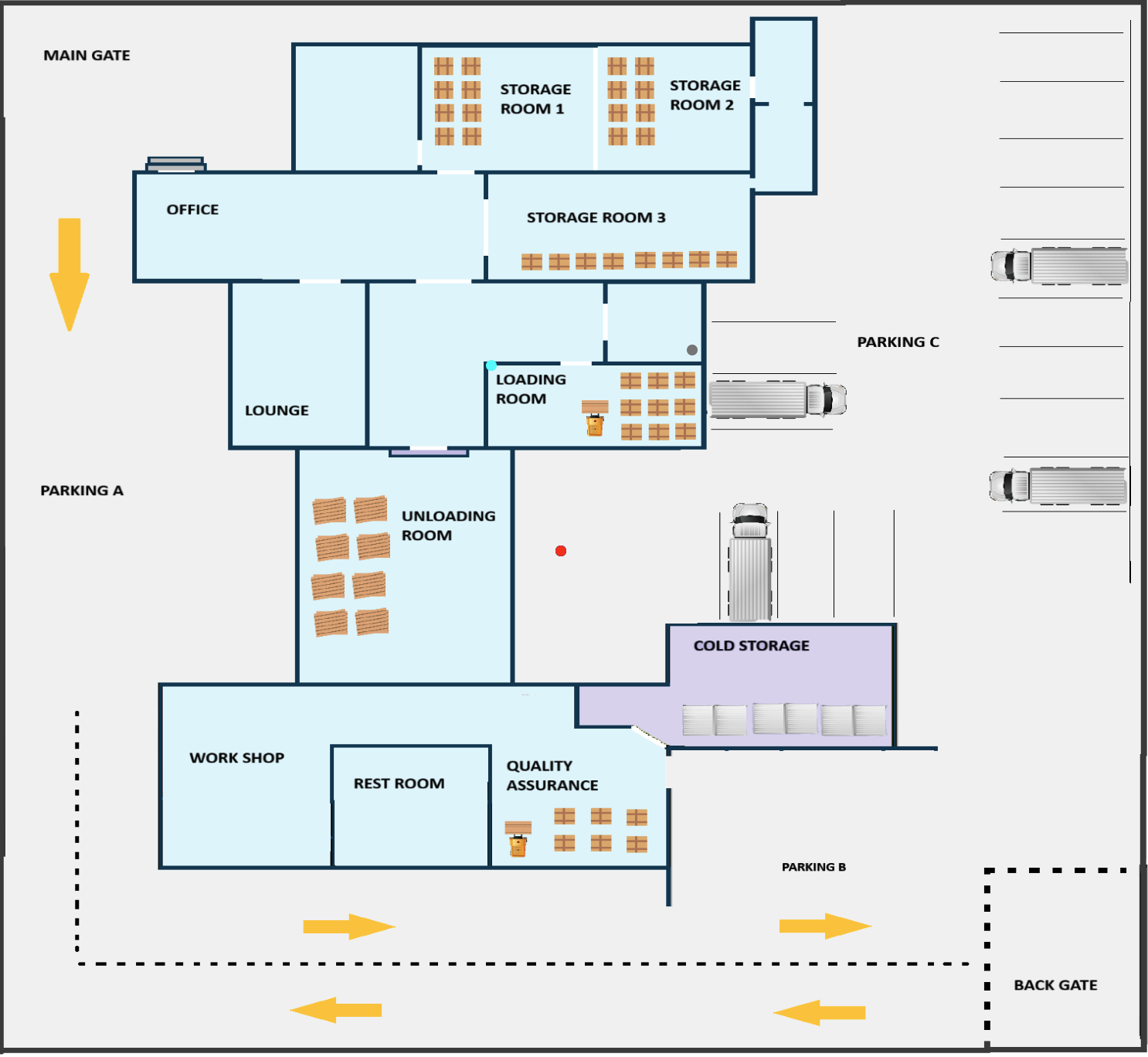
Maintaining real-time oversight of stock items across complex industrial facilities requires reliable hardware. Deploying wireless inventory trackers and low-energy Bluetooth beacons enables operations teams to automate stock counts, monitor high-value equipment, and eliminate manual barcode scanning bottlenecks. Whether integrated into a wider warehouse indoor tracking solution or configured for specialised IoT pallet tracking, BLE beacons provide continuous visibility from goods-in to dispatch.
A beacon-based inventory tracking works even better when paired with a broader view of your operations — see how our real-time asset tracking system extends this visibility across equipment, tools, and high-value assets beyond just inventory
Cargo Theft Prevention with Inventory Tracking Beacons
Warehouse cargo theft is rarely opportunistic. Organised internal theft relies on the gap between what your WMS records and what is physically happening on the floor — short shipments disguised as picking errors, assets staged in blind zones before shift end, and after-hours access to bonded stores that goes undetected until the next stocktake.
BLE inventory tracking beacons close that gap by broadcasting their location continuously to fixed mesh gateways across the warehouse. Every movement is logged in real time — not scanned at a choke point, not entered manually. The moment a tagged pallet crosses an unauthorised zone boundary or moves outside operating hours, the system generates an instant alert via SMS and email.
How beacon-based theft detection works
Geofencing by zone: Each warehouse zone (bonded store, high-value racking, loading bay, dispatch) is defined as a geofence in the RipplesIPS dashboard. Any beacon that crosses a zone boundary outside a permitted workflow triggers an alert within 30 seconds.
After-hours movement detection: Operating hours are configured per zone. A beacon that registers movement at 02:00 in a zone that closes at 18:00 generates an immediate alert regardless of which zone boundary it crosses.
Tamper and tilt detection: Accelerometer-enabled beacons register unexpected tipping, removal from a pallet, or sudden movement. Alert generated the moment the beacon registers anomalous motion outside a permitted workflow.
Immutable audit trail: Every beacon movement is timestamped and logged with zone, tag ID, and alert history. Exportable as PDF or CSV for insurance submissions, law enforcement case files, and client SLA disputes. For high-theft markets, see our full guide on warehouse cargo theft prevention across global logistics corridors.
Short-shipment detection before the truck leaves
The highest-value theft detection scenario: pallet count per dispatch zone cross-referenced against the pick list in real time. If a tagged pallet is missing from a confirmed dispatch load, the discrepancy is flagged before the dock door closes — not discovered from a client complaint three days later.
Pick-to-Light with BLE Warehouse Beacons and RTLS
Pick-to-light systems reduce picking errors by illuminating the exact shelf or bin location the picker needs to go to next, replacing paper pick lists and verbal instructions. Ripples IoT deploys pick-to-light using a combination of BLE inventory tracking beacons and e-paper shelf labels — no wiring, no fixed light arrays, deployable across any racking configuration.
How beacon-enabled pick-to-light works
Pick list integration: The RipplesIPS dashboard receives the pick list from your WMS or ERP via REST API. Each line item is mapped to a beacon-tagged bin or shelf location.
E-paper activation: When a pick sequence is initiated, the e-paper label on the target shelf illuminates with the item description, quantity, and confirmation button. The picker confirms with a single press — no scanning, no paper.
Sequential routing: The system routes the picker through the warehouse in the most efficient sequence, minimising travel distance and eliminating back-tracking. Average pick time reduction of 30–40% in medium-density warehouse environments.
Error detection: If a picker approaches the wrong shelf, the system detects the beacon proximity mismatch and alerts before the wrong item is picked.
Zero infrastructure overhead: E-paper labels are battery-powered with 5+ year life. No power rails, no wiring, no fixed portal hardware. Racking layout changes are reflected in the dashboard without physical reconfiguration.
Pick-to-light use cases
FMCG distribution: High SKU count, fast-moving stock, multiple orders being picked simultaneously. Beacon routing prevents cross-order contamination and reduces mis-picks to near zero.
Pharmaceutical warehousing: Regulatory requirements for lot traceability mean every pick must be logged against the correct batch. E-paper confirmation creates an automatic pick record tied to lot number and expiry date.
Electronics and high-value components: Where a single mis-pick can result in a production line stoppage downstream. Beacon verification confirms the correct part number before the pick is confirmed.
FIFO Automation with Inventory Tracking Beacons
FIFO — first-in, first-out — is straightforward in principle and consistently difficult to enforce manually at scale. As warehouse throughput increases, older stock gets buried behind newer arrivals, expiry dates are missed, and perishable or time-sensitive inventory is dispatched out of sequence. The cost is spoilage, write-offs, regulatory non-compliance, and, in pharma and food, potential product recalls.
BLE inventory tracking beacons enforce FIFO automatically by tracking the arrival timestamp of every tagged pallet and cross-referencing it against dispatch sequences in real time.
How FIFO inventory tracking beacons work
Arrival time stamping: Every pallet is tagged on receipt. The inventory tracking beacons broadcast their first signal the moment it enters the warehouse, creating an automatic arrival record with date, time, and entry zone.
Zone-level FIFO sequencing: The dashboard maintains a live FIFO queue per storage zone. When a pick instruction is generated, the system directs the picker to the oldest stock in that zone first — regardless of where it has been physically positioned in the racking.
FEFO for perishables: For food, pharma, and any stock with an expiry date, the system supports First-Expired-First-Out alongside FIFO. Beacons tagged with lot and expiry data automatically prioritise the shortest-remaining-shelf-life stock for dispatch.
FIFO compliance alerts: If a picker selects a newer pallet when older stock is available in the same zone, the system flags the FIFO violation in real time before the pick is confirmed.
Audit-ready FIFO reporting: The dashboard generates FIFO compliance reports by SKU, zone, and date range. Exportable for BRC, HACCP, and GDP audit submissions. For implementation details, see our FIFO automation in warehouse guide.
FIFO compliance by industry
Food and FMCG: BRC and HACCP require documented FIFO compliance. Beacon-based FEFO eliminates manual date-checking and provides an automatic audit trail for every dispatch.
Pharmaceuticals: GDP guidelines require lot traceability and FEFO dispatch. The RipplesIPS system integrates lot number and expiry data from your ERP, enforcing FEFO automatically at the pick face.
Electronics and automotive components: Component obsolescence and version control make FIFO critical for manufacturing supply chains. Beacon-based sequencing ensures the oldest build version is consumed first.
Beacon Specifications
| Specification | Detail |
|---|---|
| Technology | Bluetooth Low Energy (BLE) 5.0 / Bluetooth Mesh |
| Battery life | 3–10 years, depending on ping interval |
| Location accuracy | Sub-metre (AoA) to 2.5m (RSSI mesh) |
| Sensors available | Temperature, humidity, accelerometer, tilt, light, door open/close |
| Form factors | Pallet tag, wearable, shelf label (e-paper), asset tag, panic button |
| Ingress protection | IP67 waterproof (industrial grade) |
| Operating temperature | -40°C to +85°C |
| Certifications | CE, FCC, ISED Canada, RoHS |
| Integration | REST API, MQTT, JSON — SAP, Oracle, Sage, custom WMS |
| Deployment | 0-wire, battery-powered anchors, live in under 7 days |
Warehouse Inventory Beacon Starter Kit
The fastest way to validate all three capabilities — cargo theft prevention, pick-to-light, and FIFO — is to deploy a pilot on your highest-risk zone first. Our starter kit covers a single warehouse zone or cold store and provides measurable ROI data within 30 days.
100 BLE inventory beacons: IP67 waterproof, 3–5 year battery at standard ping interval.
20 battery-powered mesh anchors: 0-wire, no cabling required.
Edge gateway with local storage: Continues operating through power or connectivity outages.
Pre-configured RipplesIPS dashboard: Includes geofencing, FIFO queue, and pick-to-light modules.
REST API connection: Integrates seamlessly with your existing WMS or ERP.
Remote deployment support: Typically live within 7 days of hardware delivery.
Starter kit from $5,150. Full facility rollout scales by adding anchors — no new infrastructure, no civil work. See full starter kit configurations and pricing.
Frequently Asked Questions (FAQ)
1. How quickly does a beacon alert fire when inventory or assets move outside an authorised zone?
Alert latency is under 30 seconds from the moment a beacon crosses a defined geofence boundary. Instant SMS and email notifications are dispatched simultaneously, while the RipplesIPS dashboard logs the event with the exact timestamp, tag ID, and zone for your audit trail.
2. Can inventory tracking beacons monitor temperature and humidity alongside location?
Yes. Multi-sensor beacons track environmental parameters (such as temperature, humidity, tilt, and shock) alongside real-time position on a single dashboard. Automated alerts trigger the moment cold chain thresholds or storage conditions deviate from your set compliance limits.
3. How does beacon-enabled pick-to-light integrate with existing WMS or ERP systems?
Integration is handled seamlessly via REST API, MQTT, or JSON web hooks. The RipplesIPS platform ingests pick lists directly from platforms like SAP, Oracle, Sage, or custom WMS environments, maps each line item to a beacon-tagged shelf or bin, and updates pick confirmations back in real time.
4. Does FIFO and FEFO inventory automation require manual data entry of expiry dates?
No. Expiry dates, lot numbers, and batch data are automatically pulled from your ERP or WMS at the time of goods receipt via API. The system assigns the correct First-Expired-First-Out (FEFO) or FIFO dispatch sequence automatically, eliminating manual tagging errors at the rack face.
5. What happens to tracking data during a facility power or internet outage?
All BLE beacons and mesh anchors are entirely battery-powered with no mains electrical dependency. In the event of a network outage, the local edge gateway stores transaction and location data locally on-device and automatically syncs the audit trail back to the cloud dashboard once connectivity is restored.
6. What is the battery lifespan and environmental durability of industrial inventory beacons?
Our rugged inventory tags feature an IP67 waterproof rating, operating reliably in extreme conditions from -40°C in sub-zero cold stores up to +85°C on factory shop floors. Depending on your configured ping interval, internal batteries deliver a reliable 3 to 10 years of continuous operational life.
Related Reading
- Warehouse Monitoring System — Real-Time Inventory Tracking Hub
- Warehouse Cargo Theft Prevention — Global Logistics Corridors
- FIFO Automation in Warehouse with RTLS
- 0-wire Bluetooth Low Energy (BLE) pallet tracking
- Cold Chain Monitoring Solution
- RTLS Starter Kit — Pricing and Configuration
- Logistics Yard Management RTLS
Using rugged waterproof tags and BLE gateways, businesses deploy asset and laboratory equipment tracking for real-time audit compliance.
Still losing stock to pilferage and manual FIFO failures? Deploy a pilot on your highest-risk zone — validate cargo theft detection with the help of inventory tracing beacons, pick-to-light and FIFO inventory tracking compliance within 30 days, before committing to a full rollout.
Ready to calculate your return on investment? Review our flexible pricing plans and starter kits tailored for single warehouses or multi-site distribution centres.