
Indoor Positioning Technology & Real-Time Tracking Systems
Indoor positioning technology works differently depending on the environment it’s deployed in. Below is how real-time indoor location and tracking are actually used across manufacturing, healthcare, warehousing, and logistics.
Choosing the right indoor positioning approach depends on three core variables: required accuracy, facility size, and budget. Each underlying method trades off spatial precision against cost and deployment complexity differently. While broad definitions and basic indoor tracking workflows are now covered right here on this page, this guide focuses on comparing the technologies most relevant to industrial, warehouse, and commercial deployments.
What Is an Indoor Positioning System (IPS)?
An indoor positioning system (IPS) uses wireless anchors or beacons, location-enabled tags or wearables, and positioning software to determine where assets, equipment, or people are located inside a building or enclosed site.
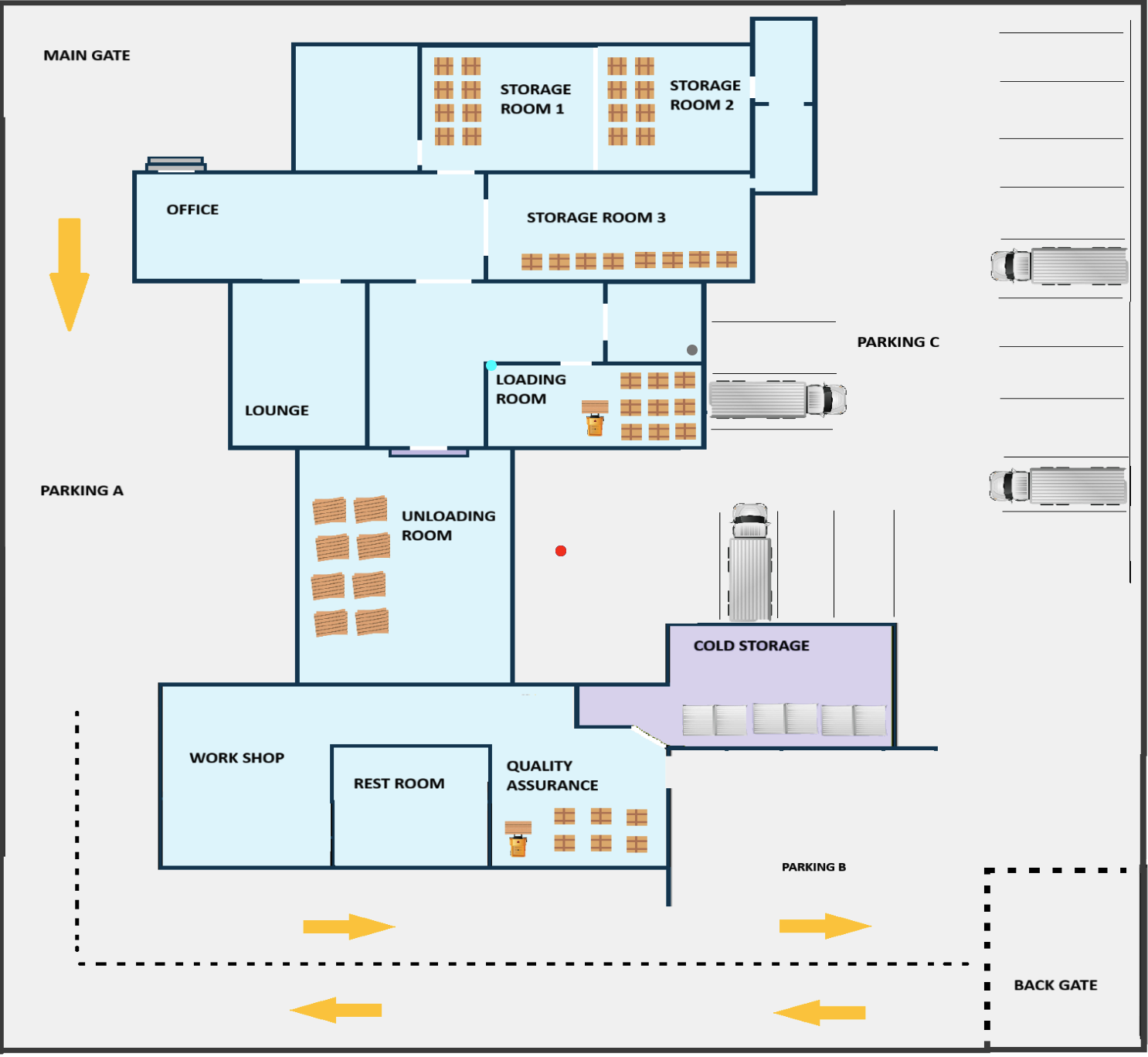
By combining ceiling-mounted anchors and mesh telemetry with Bluetooth Angle of Arrival (AoA), the RipplesIPS platform maps real-time positions onto interactive facility floor plans—giving teams continuous spatial visibility where GPS alone cannot operate reliably.
Manufacturing & Shop Floor
Indoor RTLS on the shop floor tracks tools, materials, WIP bins, and workers in real time, giving manufacturers visibility into workflow bottlenecks and machine downtime without adding wired infrastructure. It is one of the fastest ways to improve manufacturing workflows using wireless mesh hardware.
Technology Comparison Table
| Technology | Accuracy | Reader / Anchor Cost | Tag Cost | Battery Life | Best For |
|---|---|---|---|---|---|
| BLE AoA | Sub-metre / ~0.3–1 m | $70–120 | $30–70 | 2–5 years | Warehouses, hospitals, yards, indoor asset & pallet tracking |
| UWB | ~10–30 cm | $200–500 | $80–150 | 1–3 years | Specialized high-precision robotics or niche workflows |
| LoRaWAN | Zone-level | $50–80 | $40–60 | 5–10 years | Large yards, cold chain, wide indoor/outdoor coverage |
| Wi-Fi | ~3–15 m | Existing infrastructure | Varies | Varies | Rough area presence where meter-level variance is acceptable |
| App-Based | Varies / coarse | N/A | N/A | Device-dependent | Visitor or smartphone-driven navigation and people flow |
| Passive RFID | Gate/portal only | $1,500–2,000 / portal | $0.10–1 (passive) | Passive | Dock doors, checkpoints, and pass-through verification |
Note on Ripples IoT’s Approach: Ripples IoT deploys Bluetooth Angle of Arrival (AoA) and RipplesIPS to deliver an optimal balance of sub-metre accuracy, practical cost, and low-wiring deployment for warehouse, logistics, and facility use cases. Explore our wireless inventory tracking tags for stock and pallet tracking or review indoor positioning analytics for heatmaps and dwell-time insights.
BLE AoA vs. Passive RFID — Operational Comparison
Most buyers evaluating indoor positioning options compare BLE (Bluetooth Low Energy) and RFID first. Understanding how each behaves on the floor helps determine the right fit:
Passive RFID: Operates primarily as a checkpoint or gate technology, reading at short range per portal. It confirms when an item passes a doorway or dock point, rather than tracking continuous movement across an open floor, with portal reader costs typically running $1,500 to $2,000 per gate.
BLE AoA (Angle of Arrival): Delivers continuous floor-level location tracking across anchor coverage zones, with tags typically costing $30 to $70 and lasting 2 to 5 years on battery. Without heavy gate infrastructure or line-of-sight scanning bottlenecks, BLE AoA supports real-time asset location, FIFO workflows, and pallet tracking across active floors at a lower overall infrastructure footprint.
For detailed protocol trade-offs, review our RTLS technology comparison guide.
Which Industries Use Indoor Positioning Technology?
Warehouses & Logistics: Real-time pallet location, FIFO dispatch support, forklift tracking, and continuous inventory cycle counting—supported by wireless inventory tracking tags and our warehouse monitoring systems.
Hospitals & Healthcare: Patient flow visibility, critical equipment location, and staff safety monitoring. See RTLS for hospitals.
Factories & Shop Floors: Work-in-Progress (WIP) tracking, machine uptime visibility, and worker safety zones. See production floor management.
Yard Management: Trailer location, dock assignment, and dwell-time reduction. See yard management.
clutter_report.txtCold Chain: Temperature-monitored pallet and shipment tracking moving between docks and temperature-controlled storage. See cold chain monitoring.
Barriers to Adopting Indoor Positioning Technology
Upfront & Total Cost: High-cost legacy or specialised setups can slow rollouts, whereas BLE AoA keeps hardware and installation costs practical. A starter kit lets you validate workflows in one zone before scaling across a full facility.
Installation Time: Streamlined wireless anchor placement and RipplesIPS configuration reduce downtime compared to heavy cable or conduit runs.
Battery Maintenance: Because BLE tags run for 2 to 5 years depending on configuration and reporting intervals, operations teams should plan a structured battery replacement schedule into long-term maintenance.
Vendor & Accuracy Validation: Because real-world accuracy depends on ceiling height, rack density, and anchor layout, testing in your actual operating environment is essential before full rollout.
How Accurate Does Indoor Positioning Technology Need to Be?
Required accuracy depends directly on the operational workflow:
Zone-level / multi-metre accuracy fits coarse area presence or broad movement trends.
Sub-metre accuracy (Bluetooth AoA) fits pallet location, FIFO workflows, and active warehouse or floor tracking.
High-precision / sub-30 cm setups are reserved for specialised applications where tight spatial tolerances justify higher hardware and calibration overhead.
To analyse historical movement, dwell times, and zone utilisation from your location data, visit indoor positioning analytics or contact our team to scope a deployment.