

What Is an Indoor Positioning System (IPS)? The Definitive Guide
What is indoor positioning? While global positioning systems (GPS) excel at outdoor navigation using satellite signals, they fail inside buildings, warehouses, and manufacturing plants due to a lack of direct line-of-sight. An Indoor Positioning System (IPS) solves this limitation by using a network of wireless devices to track the location of assets, inventory, forklifts, and personnel indoors.
If you are evaluating how to track assets inside your facility, this guide breaks down how indoor tracking works, the technology types available, and how to choose the right system.
For a side-by-side look at deployment types, see our indoor tracking system overview, or if you need outdoor-adjacent coverage too, our indoor GPS tracking page covers the hybrid case.
What Is an Indoor Positioning System?
An indoor positioning system (IPS) is a technology infrastructure used to locate objects or people inside buildings where GPS and other satellite signals cannot penetrate. By deploying fixed readers and attaching mobile tags to equipment or inventory, operations managers gain real-time visibility across the facility floor.
Unlike broad outdoor tracking, indoor positioning focuses on high-precision metrics such as sub-metre accuracy, zone-level tracking, and real-time movement analytics. Organisations leveraging these tools often combine them with RTLS technology comparisons to determine the best hardware for their layout.
How Indoor Positioning Works
Indoor tracking relies on signal propagation between transmitters (tags) and receivers (readers/anchors). Depending on the technology chosen, the system measures:
Angle of Arrival (AoA): Calculates the exact direction from which a signal hits a reader.
Received Signal Strength Indicator (RSSI): Estimates distance based on signal power loss.
Time of Flight (ToF): Measures the exact time it takes for a signal to travel between tag and reader.
For a deeper dive into technical accuracy and cost tradeoffs across different methods, review the NIST indoor positioning and navigation research program.
Core Indoor Positioning Technologies: BLE vs UWB vs RFID
Selecting the right architecture depends on your facility size, budget, and accuracy requirements:
BLE AoA (Bluetooth Low Energy Angle of Arrival): Delivers sub-metre accuracy (0.3–1 m) with low infrastructure costs and zero-wiring deployment. Ideal for general warehouse asset tracking, smart factory asset inventory management, and pallet visibility.
UWB (Ultra-Wideband): Offers ultra-precise tracking (10–30 cm accuracy) but comes at a higher reader and tag cost. Best reserved for precision robotics, pharma, and advanced manufacturing assembly lines.
Passive RFID: Operates strictly as a gate or portal checkpoint (reading at 1–5 feet). While cost-effective for bulk scanning, it cannot provide continuous floor-level tracking. Explore detailed implementation setups in our Bluetooth Mesh positioning guide.
For a cost-first entry point before scaling to UWB, see our budget indoor positioning systems
Key Industry Use Cases
Warehouses & Logistics: Eliminates misplaced inventory, tracks forklift movements, and enforces preventive maintenance and yard management workflows.
Hospitals & Healthcare: Monitors vital mobile medical equipment and streamlines clinical asset visibility.
Factories & Shop Floors: Tracks Work-in-Progress (WIP) and measures tool tracking, productivity, and safety metrics.
Where Indoor RTLS Is Used
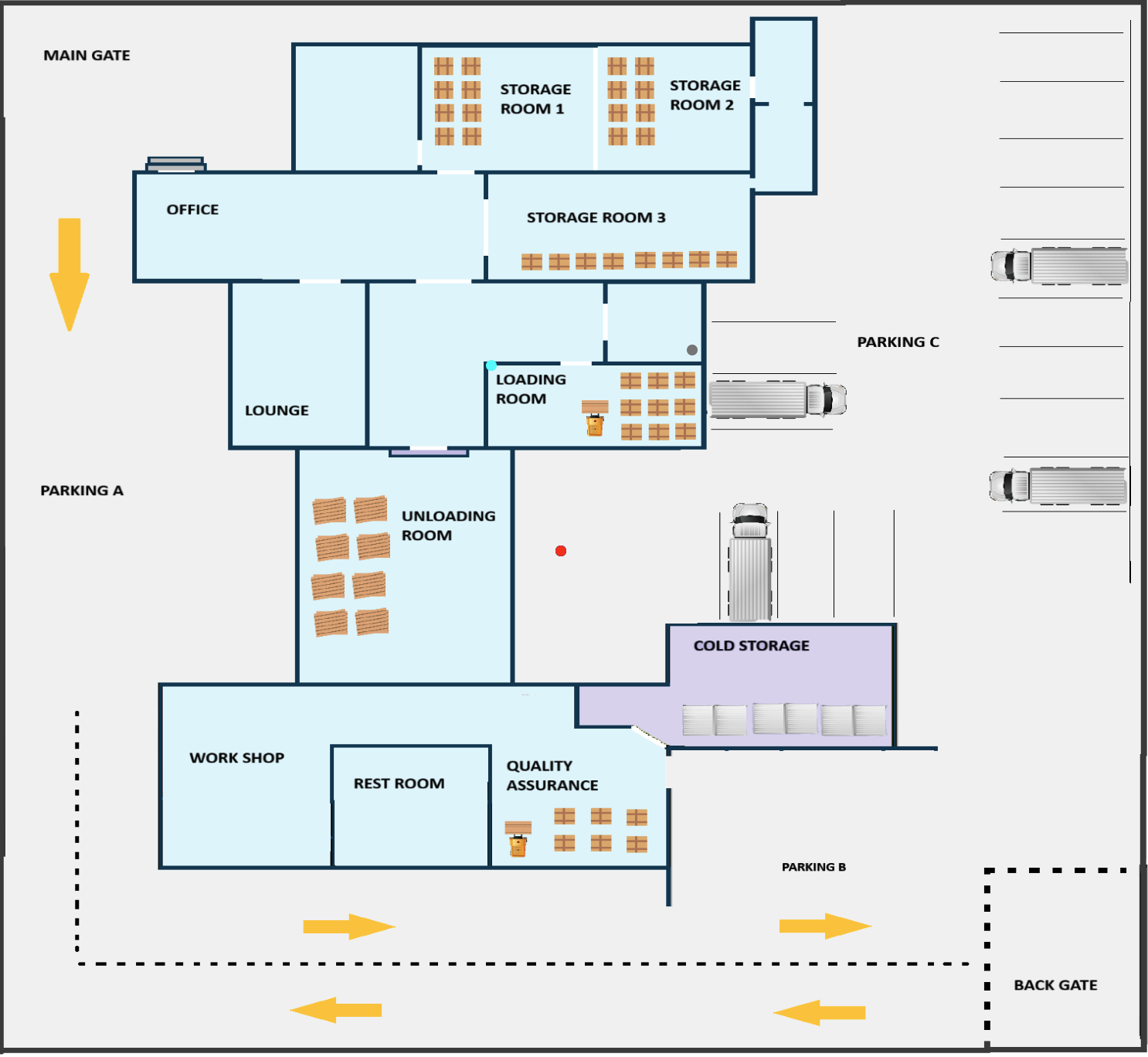
Indoor positioning systems are deployed across manufacturing shop floors, hospitals, warehouses, and logistics yards—anywhere GPS can’t reach.
Once location data is captured, it needs to become something operations teams can act on—zone reports, dwell-time tracking, and safety alerts. Once deployed, teams typically want to see location data broken down by zone and dwell time, the indoor positioning analytics guide covers how raw RTLS feeds turn into pivot-table reporting.
Not every facility needs the same technology. Bluetooth mesh, Wi-Fi, and UWB each trade off differently on accuracy, cost, and infrastructure. You can review options directly via our inventory tracking software overview.
Frequently Asked Questions (FAQs)
What is the difference between GPS and an indoor positioning system (IPS)?
GPS relies on satellite constellations to track positions outdoors where line-of-sight is unobstructed. An indoor positioning system (IPS) uses local radio frequency, optical, or acoustic signals inside buildings where satellite signals cannot reach.
How accurate is modern indoor positioning technology?
Accuracy varies by technology. Passive RFID offers gate-level detection, Bluetooth Low Energy (BLE AoA) delivers sub-metre accuracy (0.3–1 m) suitable for pallet tracking, and Ultra-Wideband (UWB) provides centimetre-level precision (10–30 cm) for robotics.
Can indoor positioning systems be deployed without wiring?
Yes. Modern 0-wire BLE AoA systems deploy in days using battery-powered tags and readers, eliminating the need for complex ceiling cable runs or wall conduits. To explore deployment structures, check out our pricing and starter kits.